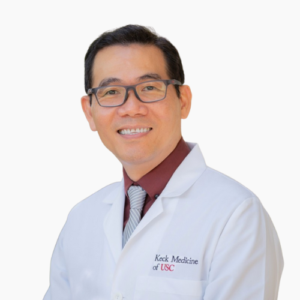
David Tran
Director University of Southern California
Dr Tran received his MD and PhD degrees from the Mayo Clinic College of Medicine in 2005 and completed his postgraduate training in Oncology and Neuro-Oncology at Washington University School of Medicine in St Louis in 2011. He is a leader in Precision Medicine with many seminal publications in cancer research and serves as the principal investigator of several national clinical trials in brain cancer. Research in the Tran laboratory focuses on understanding the molecular mechanism of how cancer develops, progresses, and resists treatment through a vertically integrated approach, starting with clinical observations, guided by systems and computational analyses, followed by experimental validation and translation into novel anti-cancer therapeutics.
Seminars
- Join this workshop to deepen your understanding of how omics approaches and molecular subtyping are used to stratify glioblastoma patients and define target populations for new therapies
- Examining the strategic integration of multi-omics including genomics, transcriptomics, proteomics and epigenomics for a more comprehensive and clinically actionable GBM classification system
- Identifying and validating specific molecular features as robust markers for defining GBM subtypes with prognostic and predictive value
- Leveraging molecular subtyping further down the line in development to design biomarker-driven clinical trials to enrich patient experience and improve trial efficiency
- Identifying and validating novel biomarkers with a focus on their identification in discovery
- Looking towards personalized GBM treatment where therapy selection is guided by a patient’s molecular profile